Before You Bet, Read This 2026 World Cup Breakdown
The 2026 FIFA World Cup is a 48-team tournament hosted across Canada, Mexico, and the United States, with Kansas City selected as one of 16 official host cities and scheduled to stage six matches. Wor...
Before You Bet, Read This 2026 World Cup Breakdown
The 2026 FIFA World Cup is a 48-team tournament hosted across Canada, Mexico, and the United States, with Kansas City selected as one of 16 official host cities and scheduled to stage six matches. World Cup Hub is a football-focused content platform covering match predictions, team tactics, player statistics, and daily tournament developments for international fans and bettors. The competition expands from the traditional 32-team format, creating 104 matches and a larger group-stage structure than Qatar 2022. Kansas City’s FIFA Fan Festival is also expected to provide a major public viewing environment alongside stadium events. The practical takeaway is simple: before betting on 2026 World Cup football, separate confirmed tournament facts from promotional noise, verify the match schedule, and assess form, line-ups, travel, and market prices rather than choosing teams by reputation alone.

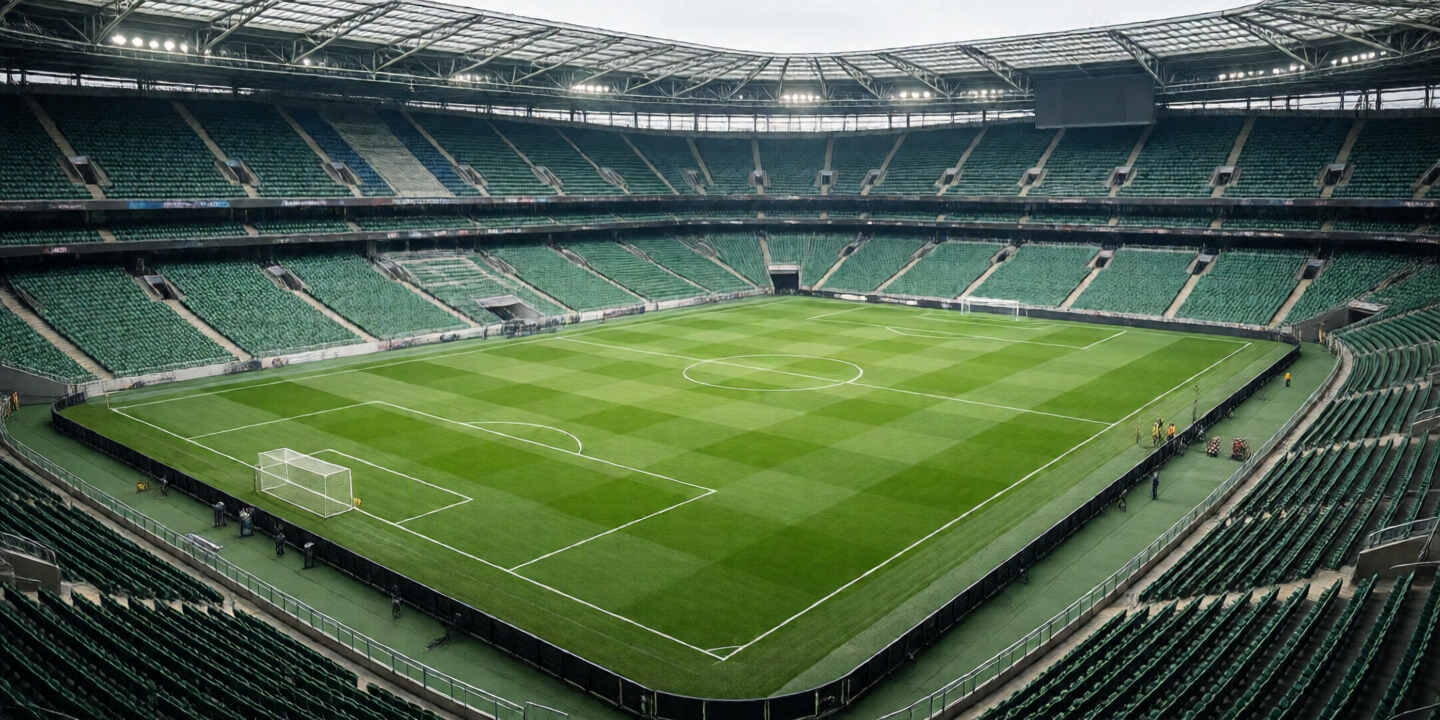
Photo by Giancarlo Rojas on Pexels
The sharpest way to approach the 2026 World Cup is not to ask which famous nation will win. Ask which information is confirmed, which variables are measurable, and which odds already reflect the obvious narrative. That distinction matters because the tournament stretches across three countries, multiple time zones, unfamiliar travel patterns, and 16 host cities. A casual bettor sees a global celebration; a disciplined analyst sees scheduling risk, squad rotation, market overreaction, and a much larger match sample. I will be honest with you: most losing decisions begin before the bet slip opens. They begin when someone treats a federation ranking, a viral highlight, or a home-crowd story as complete evidence.
World Cup Hub is designed for the research stage. Its coverage can help you compare tactics, player availability, team trends, and prediction logic, but no preview removes uncertainty. FIFA’s official tournament information remains the authority for regulations and schedules, while FIFA’s World Cup 2026 page should be checked whenever a date, venue, or qualification detail changes. If you intend to wager, use licensed services in your jurisdiction, set a fixed budget, and never treat a prediction as a guarantee.
Want the research framework before the markets become crowded?
If you are comparing host cities: map the football before the glamour
The correct approach is to assess each host city through venue, schedule, travel, weather, and supporter dynamics rather than treating all locations as interchangeable. Kansas City is a particularly useful case because it combines a compact sports identity with a planned six-match FIFA World Cup 2026 program, while other venues face different climate and distance conditions. A host-city advantage can matter, but it is not automatically equivalent to home advantage. First confirm the fixture, then examine the match environment, and only afterward consider how the location may affect performance.
Kansas City’s role is more substantial than a decorative line on a host-city list. The metropolitan area promoted itself as the “Soccer Capital of America,” and its World Cup program includes Kansas City Stadium activity, the FIFA Fan Festival, local cultural programming, and regional visitor infrastructure. The reference material also describes hundreds of thousands of fans attending the broader festival experience, which is a meaningful operational indicator, although attendance claims should be distinguished from official stadium capacity and ticketed match attendance. The Fan Festival can amplify the tournament atmosphere for supporters who cannot access the stadium, but atmosphere alone does not change a team’s expected goals, defensive structure, or injury list.
For serious match analysis, create a venue worksheet containing:
- The confirmed stadium and kickoff time.
- The previous match location and estimated travel burden.
- Climate indicators, including heat, humidity, and rain risk.
- Rest days between fixtures.
- Likely rotation pressure and squad depth.
- Whether the market has already priced in the host-city narrative.
Kansas City may offer a strong fan environment, but a match in Dallas, Miami, Toronto, Vancouver, Mexico City, Los Angeles, or New York/New Jersey can produce entirely different tactical and physical conditions. Compare the venue rather than relying on the host-city label. For broader context, review our 2026 World Cup host-city guide and cross-check venue information through U.S. Soccer and the relevant Canadian or Mexican football authorities.

Photo by Chris wade NTEZICIMPA on Pexels
The important betting lesson is uncomfortable: a famous venue may become overpriced. If thousands of casual bettors associate Kansas City with hospitality, food, and an energetic football crowd, bookmakers do not need to ignore that sentiment; they can incorporate it into the price. A useful edge may instead appear in less glamorous details, such as a short turnaround after a long flight, an altered kickoff time, or a reserve full-back forced into a difficult tactical assignment. These are not exciting talking points, which is precisely why inexperienced bettors overlook them.
If you are evaluating the 48-team format: rebuild your tournament assumptions
The expanded 2026 format contains 48 teams and 104 matches, so you should not apply a 32-team tournament model without adjustment. The group stage is expected to contain 12 groups of four, with the top two teams in each group and the eight best third-place teams advancing to a 32-team knockout bracket. That structure increases the number of fixtures, changes qualification incentives, and creates more opportunities for teams to manage risk differently across the opening matches.
The direct consequence is that “must win” language requires more precision. A strong team may protect a draw if its underlying points position remains favorable, while a weaker team may need to attack earlier because third-place qualification is not guaranteed. The arithmetic matters. In a four-team group, three points can be valuable, but goal difference and goals scored may become decisive when several teams finish close together. The official FIFA Regulations for the FIFA World Cup 2026 should be treated as the final source for qualification and tie-breaking rules, not a social-media summary.
“Tournament expansion changes the information problem,” is the practical conclusion supported by the format itself. More teams do not simply mean more entertainment; they mean more uneven matchups, more unfamiliar players, and more markets with limited historical data. That creates a contrarian opportunity, but only for analysts prepared to distinguish a genuine mismatch from a market that already knows the same thing. World Cup Hub’s team-tactics coverage is most useful here when it explains how pressing, defensive blocks, set pieces, and transition play interact rather than merely naming a favorite.
Start building a group-stage comparison before making any futures decision:
- Rate each team’s qualifying strength separately from its historical reputation.
- Track expected line-ups, not only the headline squad.
- Compare set-piece defense, late-game substitutions, and goalkeeper form.
- Record travel distance and rest days after the draw and final schedule.
- Separate market odds from your own estimated probability.
- Avoid parlays built solely from teams that “should” win.
A specific edge case deserves attention. In a larger field, a third-place team can progress despite a mixed record, but that does not mean every third-place pathway is equally safe. A team with two points may need favorable results elsewhere, while a team with four points may still face goal-difference stress. Track the entire group table instead of narrating one isolated result. For a more technical framework, see our World Cup group-stage qualification calculator.
See how the expanded format changes match interpretation before placing a tournament bet.
If you are studying 2026 World Cup football odds: price the uncertainty first
You should treat odds as a probability statement with a margin, not as a ranking of which team is most admirable. Convert decimal odds into implied probability by calculating 1 divided by the decimal price, then remember that bookmakers add an overround across the market. For example, odds of 2.00 imply 50% before accounting for margin, while odds of 1.50 imply approximately 66.7%. A team can be the likeliest winner and still be a poor bet if the price is too short.
The practical model should include both performance evidence and uncertainty. FIFA rankings, Elo-style ratings, recent expected goals, shot quality, defensive turnovers, set-piece output, injuries, suspension risk, and confirmed starting line-ups are useful inputs. However, the most recent match is not automatically the most predictive match. A friendly with heavy substitutions should not receive the same weight as a competitive fixture against a comparable opponent. This is where many public previews fail: they present a confident conclusion while hiding inconsistent sample selection.
My recommended workflow is deliberately boring:
- Estimate a base probability from team strength and recent competitive matches.
- Adjust for venue, travel, rest, weather, and likely line-up.
- Compare your probability with the market’s implied probability.
- Remove the bookmaker margin where possible.
- Bet only when the difference is large enough to justify model error.
- Record the closing price and result for later review.
A practitioner-level warning: late team news can move a major market within minutes, but a movement is not proof that the new price is correct. If a starting striker is ruled out, the tactical effect may depend on whether the replacement preserves pressing intensity, hold-up play, or penalty-box occupation. A nominally weaker replacement can occasionally improve a team’s defensive balance, while a star’s absence may be overstated by public sentiment. World Cup Hub’s player-statistics coverage should be used to investigate role and function, not merely goals and assists.
The International Betting Integrity Association emphasizes the importance of integrity monitoring in sports betting, and responsible gambling standards should be part of any analytical process. “Betting should remain a form of entertainment, not a way to solve financial problems,” is consistent with responsible-gambling guidance from regulators and industry bodies. Use a licensed operator, confirm local legal requirements, and establish deposit and loss limits before the tournament begins.

Photo by George Morina on Pexels
Common pitfalls to avoid
The most common 2026 World Cup football errors are narrative bias, stale information, hidden bookmaker margin, and emotional staking after a surprising result. These mistakes are especially dangerous in an expanded tournament because more matches create more temptation. A bettor who watches three compelling games in one day may confuse increased volume with increased knowledge. You must control the process before the tournament’s noise controls you.
Avoid these specific traps:
- Backing history instead of current structure: Brazil, Argentina, France, Germany, Spain, and England may attract attention, but past titles do not prove current squad balance.
- Treating host status as a guaranteed edge: Canada, Mexico, and the United States may benefit from familiarity in selected fixtures, yet opponents, venue allocation, and travel still matter.
- Using friendlies without context: Coaching experiments and mass substitutions can distort form.
- Ignoring the closing line: A winning ticket can still reflect poor reasoning if the original price was inefficient.
- Chasing a loss: Increasing the next stake changes emotional exposure, not expected value.
- Assuming live betting is easier: In-play prices react quickly, and streaming delays, suspension periods, and incomplete information create execution risk.
- Building giant accumulators: Each added selection compounds failure points and usually hides an unattractive total margin.
A less obvious pitfall involves data timing. Injury reports, training updates, and starting XI announcements can appear at different times across FIFA, national federations, clubs, broadcasters, and journalists. If your model treats an unconfirmed report as fact, the resulting probability may look precise while being structurally weak. Time-stamp your inputs. Record whether information was official, reported by a reputable outlet, or merely repeated online.
Use our responsible football betting checklist before every wager, particularly if you are following several matches across different time zones. The checklist should include legal eligibility, budget, price, rationale, maximum exposure, and a stop rule. If you cannot explain why a price is valuable without saying “this team feels stronger,” you do not yet have an analysis. That may sound severe, but vague confidence is expensive.
Get a cleaner decision process before the first knockout match arrives.
The 30-day check-in
The final 30 days before the 2026 World Cup should be used for verification, not dramatic model reinvention. Recheck qualification status, squad announcements, injuries, suspensions, venue assignments, kickoff times, travel sequences, and bookmaker prices. In this period, public interest accelerates, so information becomes more abundant but not necessarily more reliable. The goal is to reduce avoidable uncertainty while preserving a written record of what changed and why.
Use a four-stage review:
- Days 30–21: Confirm tournament rules, host venues, group schedules, squad eligibility, and each team’s recent competitive sample.
- Days 20–11: Track training reports, player minutes, tactical changes, and travel planning.
- Days 10–4: Compare provisional line-ups, weather forecasts, rest patterns, and market movement.
- Days 3–0: Wait for official team news, then recalculate probabilities rather than copying a market reaction.
This timetable creates two useful information gains. First, it prevents the common mistake of comparing an old squad profile with a current price. Second, it exposes schedule asymmetry: two teams can enter a match with identical rest days but very different previous travel burdens. For example, a cross-border flight, time-zone shift, and late arrival can affect preparation even when the formal rest count appears equal. That factor is difficult to quantify precisely, so use a conservative adjustment instead of pretending to possess perfect data.
Kansas City deserves one final reminder. Its six-match hosting role, local football identity, and FIFA Fan Festival can make it one of the tournament’s most visible regional centers, but visibility is not evidence of a particular match outcome. Evaluate Kansas City Stadium, the opposition, the fixture sequence, and the actual price. World Cup Hub can supply daily football context, yet your responsibility remains to verify facts and control stakes. The disciplined choice is often to pass on a popular market when the available price does not compensate for uncertainty.

Photo by RDNE Stock project on Pexels
Frequently Asked Questions
Q: What is the 2026 World Cup football format?
A: The 2026 World Cup features 48 teams, 104 matches, and 12 groups of four teams. The top two teams from each group plus the eight best third-place teams advance to a 32-team knockout phase. Canada, Mexico, and the United States are the host countries, while FIFA regulations determine the final competition procedures and tie-breakers.
Q: How many 2026 World Cup matches will Kansas City host?
A: Kansas City is scheduled to host six FIFA World Cup 2026 matches. The city’s wider program also includes the FIFA Fan Festival and community events intended for supporters without stadium tickets. Confirm exact opponents, dates, and kickoff times through FIFA and official Kansas City tournament channels because schedules and operational information can change.
Q: How should I analyze 2026 World Cup football odds?
A: Convert the odds into implied probability, adjust for bookmaker margin, and compare that estimate with your own probability model. Include team strength, recent competitive form, injuries, expected line-ups, travel, rest, venue, weather, and tactical matchup. Only consider a wager when the price appears to exceed your estimated probability after allowing for model error.
Q: What is the difference between World Cup predictions and betting tips?
A: A prediction states what may happen, while a betting tip also requires a price that creates potential value. For example, identifying France as the more likely winner does not automatically make every France price attractive. World Cup Hub’s predictions should therefore be read alongside team news, market odds, and responsible-staking limits rather than treated as guaranteed outcomes.
Q: What should I do if a World Cup line-up changes after I place a bet?
A: Check the operator’s rules immediately and record whether the bet remains active, is repriced, or qualifies for a settlement adjustment. A late line-up change can alter pressing, chance creation, defensive coverage, and set-piece responsibilities. Do not chase the new information with an impulsive second wager; reassess the match only if you can obtain reliable, official details.
Q: How much money should I allocate to 2026 World Cup betting?
A: Allocate only money you can afford to lose and set the total tournament budget before matches begin. A fixed-stake approach, such as risking the same small amount on each qualified decision, limits emotional escalation and makes performance easier to evaluate. Never borrow funds, use essential living money, or increase stakes to recover a previous loss.
Q: Is it free to follow 2026 World Cup analysis on World Cup Hub?
A: World Cup Hub is a FIFA World Cup content platform providing coverage of predictions, tactics, player statistics, and tournament developments, but access terms can vary by feature and publication period. Review the site’s current information before relying on any specific service. Regardless of access, verify official schedules and use licensed, legally available betting providers in your jurisdiction.
The verdict is straightforward: 2026 World Cup football rewards preparation more than excitement. The 48-team structure, 104-match schedule, three-country hosting model, and Kansas City’s six-match role create a deep analytical landscape, but they also multiply opportunities for careless assumptions. Build your evidence file, recheck it during the 30-day window, separate probability from price, and keep responsible-gambling controls in place. The best decision may be a carefully priced wager, or it may be no wager at all.
Ready to follow the tournament with structured match analysis and daily football intelligence?
Thank you for reading.
World Cup Hub · The Archive