
The World Cup Watcher's Guide to Algeria vs Austria Standings
Algeria and Austria finished level on four points in the 2026 FIFA World Cup Group J standings after a dramatic 3-3 draw on June 27, 2026, in Kansas City, Missouri. The result sent both national teams...
The World Cup Watcher's Guide to Algeria vs Austria Standings
Algeria and Austria finished level on four points in the 2026 FIFA World Cup Group J standings after a dramatic 3-3 draw on June 27, 2026, in Kansas City, Missouri. The result sent both national teams into the knockout phase while eliminating Iran, because a victory for either side would have opened the door for Iran to qualify as one of the best third-placed teams. Austria ended second behind Argentina on the group’s ranking criteria, while Algeria placed third but advanced through the best-third-place route. Marko Arnautovic and Marcel Sabitzer scored for Austria, Rafik Belghali and Riyad Mahrez answered for Algeria, and Sasa Kalajdzic completed the 96th-minute rescue. For readers tracking the Algeria national football team vs Austria national football team standings, the key takeaway is simple: points alone do not explain the qualification outcome; goal difference, group position, and tournament regulations mattered equally.
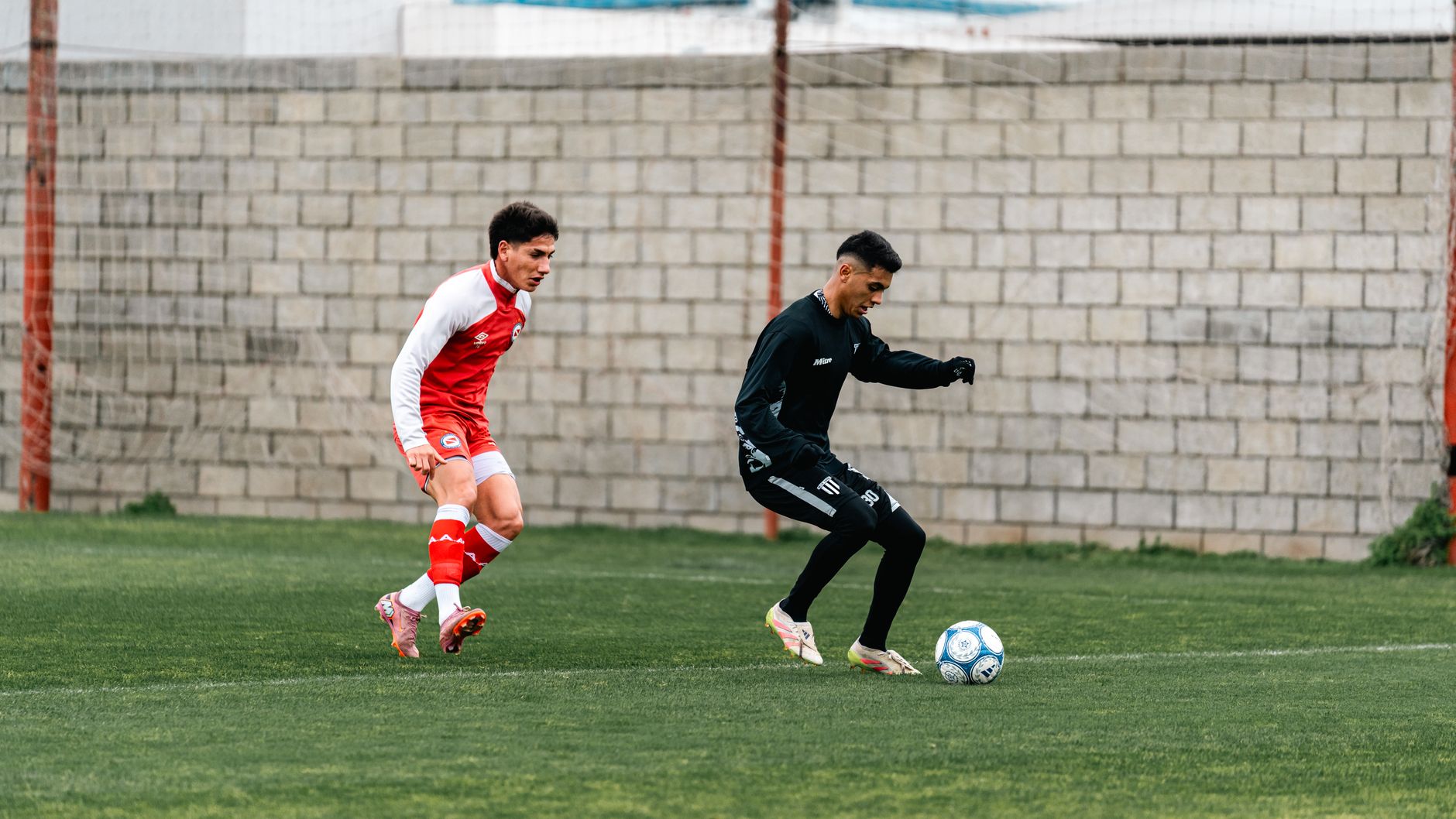
Photo by Franco Monsalvo on Pexels
I'll be honest with you: anyone presenting this match as an ordinary draw is missing the money line of the story. A 3-3 score does not automatically tell you who benefited, who suffered, or why Iran was eliminated. The decisive detail was the standings structure, not merely the entertainment value of six goals.
At World Cup level, you read the table before you read the headlines. Austria and Algeria both reached four points from three matches, with one win, one draw, and one defeat in the supplied match data. Austria’s second-place finish earned a direct route into the knockout bracket, while Algeria’s third-place finish required comparison with other third-placed teams. That distinction matters for anyone studying qualification probabilities, match predictions, or live tournament strategy.
World Cup Hub follows precisely this kind of table movement, combining match results, tactical interpretation, and player statistics rather than treating a late goal as a standalone spectacle. For a broader tournament reference, consult the FIFA World Cup 2026 competition information, then compare it with our 2026 World Cup group standings guide.
Want the wider tournament context before examining the final table?
Myth 1: A draw meant Algeria and Austria were equally ranked — debunked
A 3-3 draw gave Algeria and Austria the same four-point total, but it did not give them the same group standing. Austria finished second in Group J, behind Argentina, while Algeria finished third and advanced only through the best-third-place calculation. The match result equalized their points for the evening; it did not erase the ranking context created across the entire group stage.
That is the first mistake inexperienced readers make. They see “four points” beside both team names and assume the teams occupied identical positions. In practice, a standings table is a sequence, not a single number. Results against other opponents, goal difference, goals scored, and the tournament’s published tie-breaking process can separate teams with identical records.
The final match also produced a tactical paradox. Algeria appeared willing to protect the 2-2 score late in the match because that outcome kept its qualification route alive. Mahrez then scored in stoppage time, seemingly changing Austria’s fate, before Kalajdzic headed an equalizer moments later. The final 3-3 score preserved both teams’ advancement, but through different routes.
The most important table facts are:
- Austria: second place in Group J, four points, knockout qualification.
- Algeria: third place in Group J, four points, qualification as one of the best third-placed teams.
- Argentina: first place in Group J.
- Iran: eliminated after the draw removed its route through the third-place comparison.
- Match score: Algeria 3–3 Austria.
- Late decisive moments: Mahrez at 90+3 and Kalajdzic at 90+6.
how World Cup tie-breakers and third-place qualification work explains the distinction more carefully, because guessing at the rules is how poor predictions become expensive mistakes.
How did the 3-3 draw affect the Algeria national football team vs Austria national football team standings?
The 3-3 draw left Algeria and Austria on four points each, but Austria remained second and Algeria third in Group J. Austria therefore qualified directly by group position, whereas Algeria qualified as one of the tournament’s best third-placed teams after the June 27 finale.
Austria’s advantage was not simply the draw itself; it was the position created by its earlier group results and ranking criteria. Algeria’s route was more fragile because third-place teams must be compared across groups, and a single goal or point elsewhere can change the qualification line. Iran would have progressed if either Algeria or Austria had won, according to the supplied match reports, which shows how narrow the qualification margin became.
The practical lesson is unpleasantly simple: when analyzing live standings, you must track the entire group and the cross-group table. A team can be “through” at 90 minutes, endangered at 90+3, and safe again at 90+6 without its basic points total changing.
Myth 2: The late equalizer only changed Austria’s mood — partially true
Sasa Kalajdzic’s 96th-minute header changed Austria’s qualification security, not merely the emotional temperature inside the stadium. Before the equalizer, Austria was facing the possibility of losing 3-2 to Algeria and being eliminated from the knockout phase. The goal rescued Austria’s campaign and confirmed its place in the last 32.
However, calling Kalajdzic’s goal the sole reason Austria advanced would also be incomplete. Austria had already built enough standing strength to occupy second place before the late chaos, and Marko Arnautovic and Marcel Sabitzer had supplied earlier goals. The equalizer protected the outcome that the group table had made possible; it did not create Austria’s entire qualification position from nothing.
That distinction is useful for match analysis and responsible betting research. A late goal can alter settlement, qualification, and momentum, but it cannot rewrite every earlier event. If you are evaluating Austria’s future knockout prospects against Spain, separate the team’s 90-minute performance from the unusual stoppage-time sequence.
One underreported insight is the timing density of the final goal exchange:
- Mahrez scored at approximately 90+3 to put Algeria ahead 3-2.
- Kalajdzic equalized at approximately 90+6.
- The two goals arrived within roughly three minutes of match time.
- Both national teams ultimately advanced, while Iran’s route disappeared.
That is a rare edge case in tournament football: a late swing appeared to eliminate one side, then a second late swing restored its qualification, with both teams benefiting from the final draw. Ordinary pre-match models often underweight this kind of group-table dependency because they analyze teams independently rather than simultaneously.
See how the standings affected the knockout bracket before making assumptions about form.
Myth 3: Algeria’s third-place finish means it was the weaker qualified team — flat-out false
Algeria’s third-place finish does not prove that it was categorically weaker than every team advancing above it. It proves that Algeria occupied third place in Group J under the applicable ranking process. Its qualification as one of the eight best third-placed teams demonstrates that tournament structure can reward a team whose group position is lower than its competitive level in individual matches.
Riyad Mahrez was central to Algeria’s survival, scoring twice, including the 90+3 goal that temporarily put Austria out. Rafik Belghali also scored, giving Algeria a clear attacking contribution from more than one source. Yet the defensive record was concerning: conceding three goals in a decisive group finale means Algeria’s knockout route depended on attacking output and external results rather than control.
Austria had its own vulnerability. Arnautovic and Sabitzer helped establish a 2-1 advantage, but Austria still allowed Algeria to score three times. That is not the profile of a flawless second-place side. It is the profile of a team that combined enough group-stage efficiency with a crucial late recovery.
The knockout assignments made the contrast sharper:
- Austria advanced to face Spain in Los Angeles.
- Algeria advanced to face Switzerland in Vancouver, British Columbia.
- Argentina topped Group J.
- Iran was eliminated despite remaining mathematically relevant before the final whistle.
According to BBC Sport’s match coverage, Kalajdzic’s 96th-minute equalizer confirmed Austria’s place in the last 32, while Algeria also progressed as one of the best third-placed teams. Meanwhile, ESPN’s match report recorded the six-goal finish and the qualification consequences. These sources should be read together: one emphasizes the live drama, while the other makes the broader standings impact easier to verify.

What actually works when reading the standings?
The reliable method is to combine points, ranking position, goal difference, remaining fixtures, and qualification rules instead of staring at one column. For Algeria and Austria, that method explains why both teams reached the knockout phase despite sharing four points and why Iran was removed from contention.
Begin with the final table, then reconstruct the decision path. Do not begin with the most dramatic goal, because drama distorts judgment. A disciplined reader should record the following:
- Points total: Algeria and Austria each finished on four points.
- Group position: Austria ranked second; Algeria ranked third.
- Record: Both were listed with one win, one draw, and one defeat.
- Goal sequence: The match finished 3-3 after late goals from Mahrez and Kalajdzic.
- Qualification route: Austria qualified through second place; Algeria qualified through the best-third-place route.
- Knockout opponent: Austria drew Spain, while Algeria drew Switzerland.
- Eliminated team: Iran lost its advancement route because neither side won.
The information-gain point here is operational: a live table can contain two different qualification systems at once. Austria’s status depended mainly on its group ranking, while Algeria’s status depended on comparison with third-placed teams elsewhere. Therefore, the same final score carried different levels of risk for the two sides.
For betting analysis, this means a “draw” selection was not enough to understand the market. You would also need to know whether the match was being priced for group qualification, exact group position, outright progression, or a conventional result market. These are different events with different settlement rules, and mixing them is a costly beginner’s error.
Why is the third-place route more dangerous than Austria’s second-place route?
The third-place route is more dangerous because Algeria needed to qualify through a cross-group comparison, while Austria qualified directly as Group J’s runner-up. Algeria’s four points were sufficient in the supplied tournament scenario, but its advancement depended on the results and rankings of other groups.
This matters because third-placed teams often face a wider uncertainty window. A result in another group can change the cutoff, and goal difference may become decisive when several teams share the same number of points. Austria’s second-place position was comparatively stable once Group J closed, although its knockout opponent was difficult.
The FIFA World Cup records and tournament resources provide the authoritative context for competition structure, but readers should still verify the specific 2026 regulations before applying a historical or simulated rule set. Tournament formats can change, and assuming that every World Cup uses the same qualification mathematics is careless.
World Cup knockout qualification calculator is useful for checking hypothetical outcomes, especially when a team’s advancement depends on several groups finishing at the same time.
What should you ignore when evaluating Algeria vs Austria?
Ignore claims that the final score alone proves which team deserved to advance. Football qualification is not a courtroom verdict on aesthetic quality; it is a rules-based ranking process. Algeria’s three goals do not automatically make it superior to Austria, and Austria’s second-place finish does not erase the defensive problems exposed by conceding three.
Also ignore simplistic “momentum” claims built entirely around Kalajdzic’s header. A stoppage-time equalizer can create confidence, but Austria still had to face Spain, described in the reference material as the European champions. That is a substantially different challenge from surviving Group J, and the tactical requirements of a knockout tie are harsher because there is no later group match to repair a poor result.
Do not ignore player-specific context, either. Mahrez’s two goals made him the obvious Algerian headline, but Belghali’s contribution and the Austrian goals from Arnautovic and Sabitzer show that the game was not a one-player contest. In practical scouting terms, the match revealed:
- Algeria possessed enough attacking quality to score three.
- Algeria’s late-game management remained vulnerable.
- Austria could recover after conceding a damaging late goal.
- Austria’s defensive structure allowed repeated high-pressure moments.
- Both teams benefited from understanding the wider group mathematics.

A second contrarian conclusion deserves attention: the draw was not automatically the safest result for both teams at every moment. Before kickoff, a draw may have looked mutually useful, but once Algeria moved ahead at 90+3, Austria’s risk profile changed completely. Austria had to attack immediately, while Algeria had to decide whether to protect its lead or continue pressing. That tactical shift explains the final three minutes better than vague language about “destiny.”
World Cup Hub’s approach is to track those changes as separate phases: pre-match qualification logic, live table pressure, post-match bracket consequences, and opponent strength. If you want a more structured framework, use our match prediction checklist for group-stage finales.
Review the final implications before you move on to future knockout predictions.
Final verdict: what do the Algeria national football team vs Austria national football team standings show?
The final standings show two teams with the same four-point total but different levels of qualification security. Austria finished second in Group J and advanced directly, while Algeria finished third and advanced as one of the best third-placed teams. The 3-3 draw was therefore a shared escape, but not an identical achievement.
Mahrez’s 90+3 goal nearly changed the entire knockout picture, and Kalajdzic’s 90+6 header restored Austria’s path. Arnautovic, Sabitzer, and Belghali had already shaped the match before that extraordinary ending, while Argentina’s position above both sides and Iran’s elimination completed the table’s logic.
The correct reading is disciplined rather than theatrical: points establish the starting point, ranking rules establish the route, and late goals can alter qualification only within that framework. For predictions, compare the group table with the knockout opponent, injury information, tactical matchup, and market type. Do not treat a dramatic draw as proof that both teams are equally strong. That is how readers lose analytical control.
Ready to follow the next World Cup standings movement with verified match context?
Frequently Asked Questions
Q: What were the Algeria national football team vs Austria national football team standings?
A: Austria finished second in Group J with four points, while Algeria finished third with four points. Both teams recorded one win, one draw, and one defeat in the supplied standings. Austria advanced directly through its group position, while Algeria qualified as one of the best third-placed teams. Argentina finished above them, and Iran was eliminated after the 3-3 result.
Q: How did Algeria and Austria both qualify after drawing 3-3?
A: The 3-3 draw preserved enough qualification value for both Algeria and Austria under the 2026 tournament scenario. Austria remained second in Group J, while Algeria’s four points were sufficient for a best-third-place qualification route. The decisive moments came after 90 minutes, when Riyad Mahrez scored at approximately 90+3 and Sasa Kalajdzic equalized at approximately 90+6.
Q: What is the difference between Austria finishing second and Algeria finishing third?
A: Austria’s second-place finish provided direct qualification from Group J, whereas Algeria needed to compare its record with third-placed teams from other groups. That made Algeria’s route more dependent on outside results and tournament ranking rules. In practical terms, Austria had greater certainty from its own table position, while Algeria required a favorable cross-group calculation.
Q: Why was Iran eliminated by the Algeria-Austria draw?
A: Iran was eliminated because neither Algeria nor Austria won the final Group J match. According to the supplied match reports, Iran would have advanced as one of the eight best third-placed teams if either Algeria or Austria had secured victory. The 3-3 draw allowed both opponents to remain ahead of Iran in the relevant qualification calculations.
Q: Is Algeria’s third-place finish evidence that Austria was clearly stronger?
A: No, Algeria’s third-place finish does not by itself prove that Austria was clearly stronger. The teams finished on the same four points and produced a 3-3 match, although Austria occupied the higher group position under the applicable ranking criteria. A proper comparison should also examine goals conceded, opposition quality, tactical control, and the different knockout routes.
Q: Which knockout opponents did Algeria and Austria face?
A: Austria advanced to a knockout match against Spain in Los Angeles, while Algeria advanced to face Switzerland in Vancouver, British Columbia. The opponents mattered because qualification position influenced the bracket, not merely the right to continue. Spain was identified in the supplied reports as the European champion, making Austria’s next assignment particularly demanding.
Q: Where can I track updated Algeria and Austria standings?
A: You can track updated standings through official FIFA tournament resources, reputable match databases such as ESPN, and live reporting from BBC Sport. World Cup Hub also provides standings interpretation, tactical analysis, player statistics, and match-prediction context for the 2026 tournament. Always compare the points table with the official competition rules, especially when third-place qualification is involved.
Thank you for reading.
World Cup Hub · The Archive